Murata Commits ¥1 Trillion to Double MLCC Capacity by 2030, Adding Okayama Plant
Murata Manufacturing will invest ¥1 trillion over five years to double multilayer ceramic capacitor production by fiscal 2030, building a new facility in Okayama and expanding globally to meet AI datacenter demand.
KYOTO — Murata Manufacturing will invest approximately ¥1 trillion ($6.8 billion) over five years to double global production capacity for multilayer ceramic capacitors by fiscal 2030, the Kyoto-based component maker announced October 30. The plan includes a ¥150 billion facility in Setouchi City, Okayama Prefecture, and expansions across Thailand, the Philippines, and existing plants in Japan, ASEAN, and China.
The investment, spanning fiscal 2026 through fiscal 2030, allocates ¥350 billion to buildings and ¥650 billion to production equipment. Murata projects MLCC revenue will reach at least twice the fiscal 2025 level by 2030. President Norio Nakajima said in the announcement that the plan addresses current datacenter demand while building the production base needed beyond 2030, when the company expects AI deployment to expand from datacenters into edge devices, mobility, and robotics.
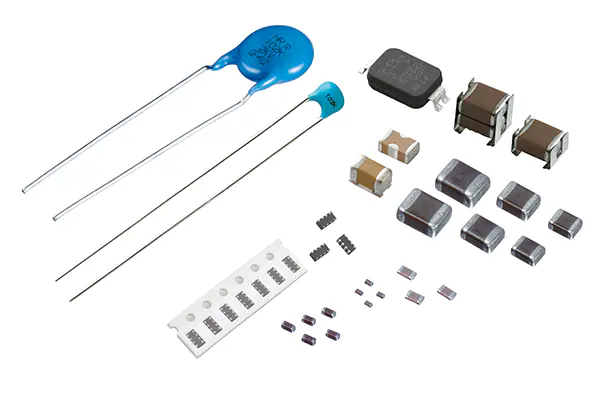
MLCCs — ceramic components that store and regulate electrical charge — are used in smartphones, automobiles, industrial equipment, and datacenter servers. Murata’s fiscal 2025 datacenter-related MLCC sales surged 74% year-on-year to approximately ¥176 billion, according to the company’s April 2026 earnings call, driving total revenue to a record ¥1.83 trillion. Fourth-quarter MLCC orders jumped 36% over the prior quarter, and capacity utilization ran near 95%.
Okayama facility joins three-site Japan network
The Okayama site will become Murata’s third domestic MLCC production base, alongside Fukui Murata Manufacturing and Izumo Murata Manufacturing. Construction of the MLCC production building begins in April 2027, with completion scheduled for end-2028. A second building for MLCC sheets and raw materials is due in 2030. Murata targets 1,500 to 2,000 employees at Okayama by 2030.
Izumo Murata will also build a new plant in Yasugi, Shimane Prefecture, though neither timing nor investment amount has been decided. Outside Japan, the plan includes a new production building at Murata Electronics (Thailand) for 2030 completion and equipment upgrades in an unused section of an existing Philippine facility by 2027. Individual investment amounts for those projects remain undisclosed. Existing plants in Japan, ASEAN, and China will receive annual equipment additions and capacity upgrades.
The plan follows a string of recent MLCC expansions. New production buildings opened in Thailand and at Izumo’s Iwami plant in 2023, at Wuxi Murata Electronics in China in 2024, and a research facility at Fukui Murata in February 2026. A leased packaging and shipping facility in India is set to reach full-scale operation in fiscal 2026.
Competitive positioning
Murata holds the largest share of the global MLCC market, estimated at roughly 40%, with Samsung Electro-Mechanics second at approximately 22% and TDK third near 10%, according to industry analysts cited in the earnings call coverage. Samsung announced in early 2026 that it would invest ¥800 billion over three years in MLCC capacity expansions, primarily in South Korea and Vietnam. TDK disclosed a ¥200 billion MLCC capex plan through fiscal 2027 in its May 2025 investor briefing.
During the April 2026 earnings call, CTO Eito Omori stated that “overall order backlog in the fourth quarter was 1.24 times the prior quarter, and 1.36 times for MLCCs alone,” but acknowledged that “actual demand hasn’t overheated yet” and visibility extends through 2026–27, with uncertainty beyond 2028. Omori attributed part of the order surge to “preemptive buying driven by price hike concerns,” though the company said it is not considering near-term price increases.
The global MLCC market for datacenter applications was valued at approximately ¥320 billion in fiscal 2025, according to Techno Systems Research figures cited in industry reports. The company’s fiscal 2026 forecast projects total revenue of ¥1.96 trillion, up 7.1% year-on-year, with operating profit rising 34.8% to ¥380 billion.
Subsidy eligibility under economic security law
Murata’s MLCC expansion appears eligible for subsidies under Japan’s economic security framework. The Ministry of Economy, Trade and Industry (METI) designates MLCCs as a “specific critical material” under the Economic Security Promotion Act, with subsidy programs for projects exceeding ¥10 billion that involve advanced equipment and commit to 10-year continuous production. METI’s electronic components subsidy program opened its fifth application round on March 26, 2026, with no disclosed deadline. The ministry has not announced any Murata awards to date, and the company’s October 30 statement made no reference to government support.
Murata’s ¥1 trillion commitment, the largest disclosed MLCC capacity investment by any manufacturer, confirms persistent MLCC supply constraints as AI infrastructure expands. For foreign investors and Japan-market strategists, the plan confirms Japan’s role in AI infrastructure materials, with Kansai-adjacent Okayama emerging as a third major production node.