Daikin Advances Phase 2 Trials of VLA-based Robotic Kitting at Osaka Factory
Daikin Industries and Tokyo startup Muso Action are testing Vision-Language-Action foundation models for sheet metal sorting automation at Daikin's Sakai Works in Osaka, completing Phase 1 in July 2026.
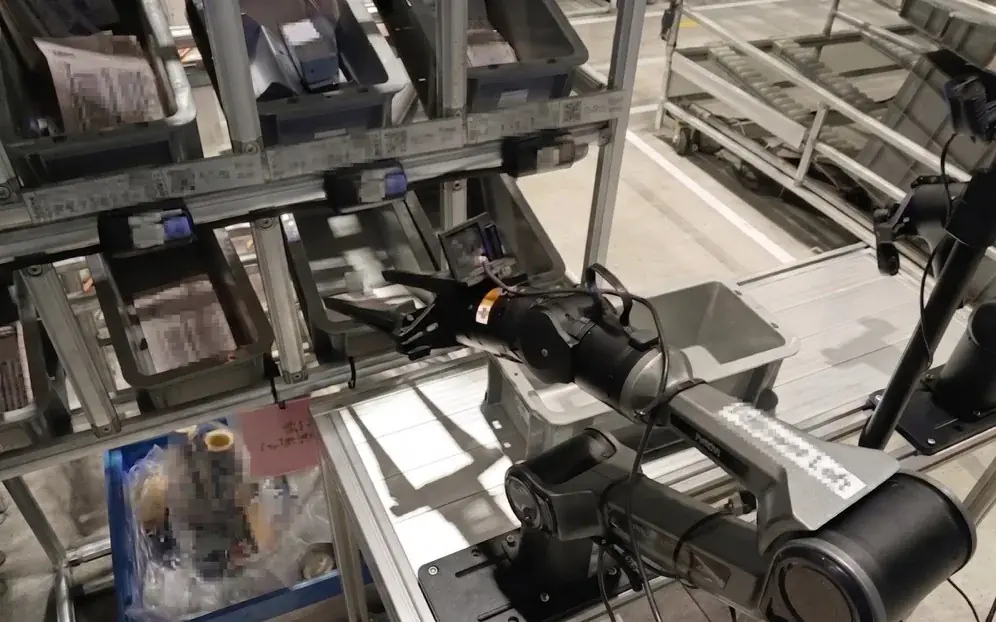
SAKAI — Daikin Industries and Tokyo-based Muso Action have entered Phase 2 field trials of Vision-Language-Action (VLA) model robotics for sheet metal kitting at Daikin’s Sakai Works in Osaka prefecture. Phase 1 wrapped up in July.
The two companies began working together with a memorandum of understanding in December 2025. Their tool is Muso’s “Physical AI Kit,” which pairs VLA foundation models with force control. Kitting, in this case, means sorting varied sheet metal parts into designated containers. Phase 1 showed that a small amount of factory floor data, combined with simulated training datasets, can improve accuracy without extensive collection on site. Phase 2 runs through November and puts the kit in the hands of Daikin’s production engineers. They gather data and refine the models themselves, without writing code.
The project aims at a gap in Japanese manufacturing: multi-variant, low-volume production lines. On those lines, part shapes and positions vary too much for fixed industrial robots. Air conditioner production faces this problem. Its machine-specific sheet metal components have resisted automation. VLA models are still rare in live factories, and most foundation-model robotics work stays in the lab. But if production staff can tune models on site with no-code tools, the technology could move closer to practical use in high-mix facilities.
Muso Action was founded in April 2025. It has raised ¥160 million (about $1.1 million) in seed funding, and in September it was selected for METI and NEDO’s GENIAC national robotics program.