Kobe University Team Shows iPS-derived Immune Cells Attack Colon Tumors in Lab Trial
Researchers demonstrated high anti-tumor efficacy against patient-derived colorectal cancer tissue using gamma-delta T cells generated from iPS cells, targeting off-the-shelf immunotherapy.
KOBE — Kobe University researchers showed that gamma-delta T cells derived from iPS cells killed patient-derived colorectal cancer tissue in laboratory tests, results published in July 2025 that advance efforts to create mass-produced cancer immunotherapy.
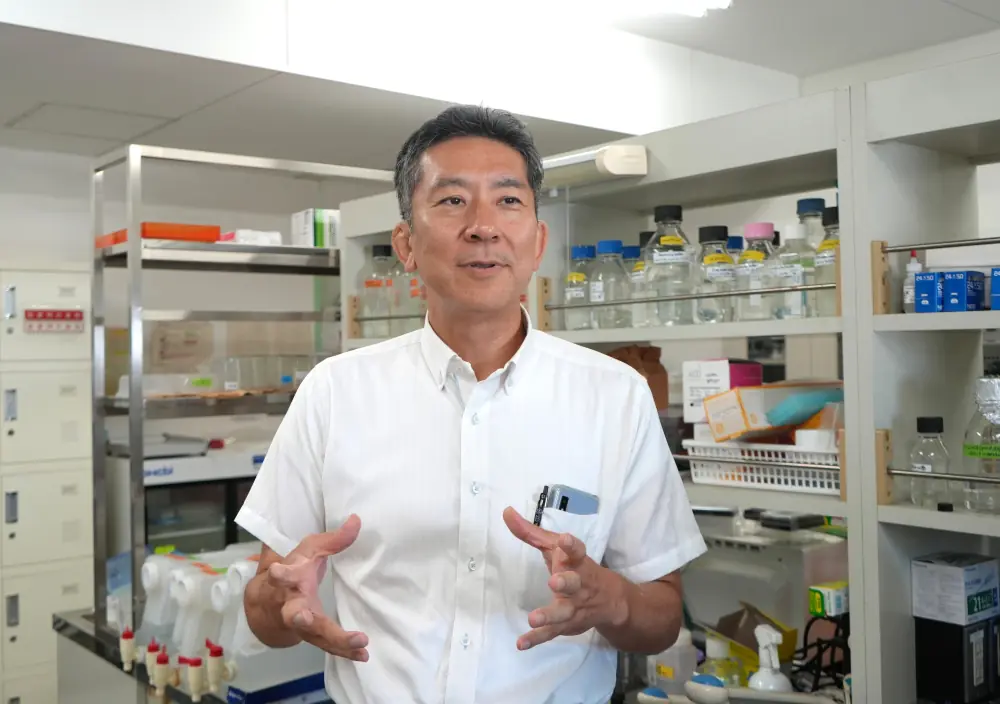
Professor Takayuki Aoi, who leads the stem cell medicine division at Kobe University Graduate School of Medicine, said the approach aims to replace current CAR-T cell therapies, which cost tens of millions of yen per patient and require harvesting cells from each individual. iPS-derived immune cells can be grown indefinitely, enabling what Aoi calls “off-the-shelf” treatments at lower cost. The team is now expanding trials to lung and other solid tumors, where existing CAR-T methods show limited efficacy compared to blood cancers.
Prof. Aoi, a former Kyoto University iPS Cell Research Institute professor who joined Kobe in 2013, said the main challenge is scaling production while maintaining safety and efficacy. The release does not specify funding amounts or timelines for clinical trials.
Japan loses 380,000 people to cancer annually. If iPS-derived immunotherapy can be manufactured at scale in Kobe’s medical-industry cluster, it offers a cost-competitive alternative to Western CAR-T platforms, particularly for solid tumors where current methods underperform.